Fruit dove profile
Spotted Imperial Pigeon (Ducula carola)
Species at a glance
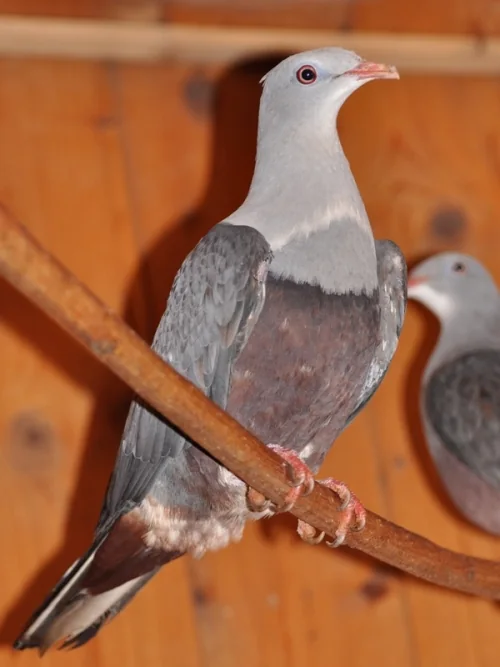
The Spotted Imperial Pigeon (Ducula carola) is a Philippine endemic and globally Vulnerable imperial pigeon. Unlike many Ducula species, males and females differ clearly in plumage. The small stock within the European Fruit Dove Project is growing through good breeding results.
- Distribution
- Philippines; depending on subspecies on Luzon, Mindoro and Sibuyan, on Mindanao, and in the western Visayas including Negros and Panay.
- Size / characteristics
- about 33 cm | pronounced sexual dimorphism; males more strongly patterned in grey, white and dark tones, females generally browner | plumage also varies among subspecies
- Status
- Small stock growing through good breeding results
Description
The Spotted Imperial Pigeon is a comparatively compact Ducula with pronounced sexual dimorphism. Males show stronger contrasts between grey, white and dark plumage areas, while females are generally browner. The precise pattern also varies among the three subspecies. The species occurs only in the Philippines and is threatened by habitat loss and hunting pressure. According to the available project information, all birds currently recorded belong to the nominate subspecies Ducula c. carola. The growing stock should therefore continue to be coordinated closely by pedigree and subspecies identity.
Profile & short facts for Spotted Imperial Pigeon
| English name | Spotted Imperial Pigeon |
|---|---|
| German name | Hufeisen-Fruchttaube |
| Scientific name | Ducula carola |
| Genus | Ducula |
| Category | Ducula - imperial pigeons |
| Distribution | Philippines; depending on subspecies on Luzon, Mindoro and Sibuyan, on Mindanao, and in the western Visayas including Negros and Panay. |
| Subspecies | Ducula c. carola – Luzon, Mindoro and Sibuyan | Ducula c. mindanensis – Mindanao | Ducula c. nigrorum – Negros, Panay and neighbouring western Visayas. According to project data, all birds currently held belong to the nominate subspecies Ducula c. carola. |
| Size / characteristics | about 33 cm | pronounced sexual dimorphism; males more strongly patterned in grey, white and dark tones, females generally browner | plumage also varies among subspecies |
| Status | Small stock growing through good breeding results |
Habitat and natural range
Primary and mature secondary lowland and montane forest and forest edges; regionally also limestone forest and coastal feeding sites.
Feeding in the European Fruit Dove Project
The species feeds mainly on fruit and berries taken in trees. In human care, a varied selection of suitable fruits should be combined with a balanced complementary food for frugivorous pigeons. In a small threatened population, body condition, food intake and breeding fitness of individual birds should be documented consistently.
Husbandry in the European Fruit Dove Project
The species requires a spacious, well-structured and permanently frost-free aviary with open flight paths, elevated perches and protected retreat areas. Disturbance and competition should be minimised during pair formation and breeding. Visible sexual differences make pair observation easier but do not replace reliable individual identification and pedigree management.
Breeding and offspring
The clutch normally consists of a single egg. Quiet, elevated and stable nest sites with suitable twig material support undisturbed breeding behaviour. Because the project stock is small but growing, pairings, subspecies identity, pedigree, hatching and juvenile development should be recorded completely. Good breeding success must not lead to uncoordinated pairings.
Subspecies and systematics
Ducula c. carola – Luzon, Mindoro and Sibuyan | Ducula c. mindanensis – Mindanao | Ducula c. nigrorum – Negros, Panay and neighbouring western Visayas. According to project data, all birds currently held belong to the nominate subspecies Ducula c. carola.
Special notes on the species
The pronounced sexual dimorphism is unusual among large imperial pigeons. The species is globally classified as Vulnerable and is endemic to the Philippines.
Conservation status
| IUCN | Vulnerable |
|---|---|
| CITES | Not listed |
| EU species protection | Not listed |
| Ring size | 10,0 mm |
Further sources
Images of the Spotted Imperial Pigeon
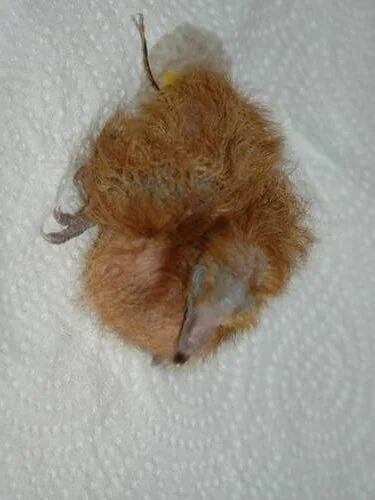
Image credits
- Hufeisen-Fruchttaube Jungvogel (© Seth Martens)
- Hufeisen-Fruchttauben (© Seth Martens)
- Hufeisen-Fruchttaube im Zoo Prag (© Johannes Pfleiderer)
- Hufeisen-Fruchttaube Jungvogel bei Seth Martens (© Johannes Pfleiderer)