Fruit dove profile
Elegant Imperial Pigeon (Ducula concinna)
Species at a glance
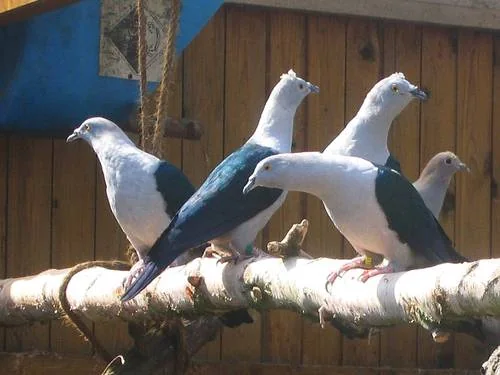
The Elegant Imperial Pigeon (Ducula concinna), also known as the Blue-tailed Imperial Pigeon, is a large island pigeon with a golden-yellow iris, silvery-grey head and blue-green gloss on the wings and tail. It occurs on numerous smaller islands in central and eastern Indonesia. Its status within the European Fruit Dove Project has not yet been documented.
- Distribution
- Numerous smaller islands in central and eastern Indonesia, including Sangihe and Talaud, islands south of Sulawesi, and the central and southern Moluccas including the Kei and Aru Islands.
- Size / characteristics
- about 43 cm | golden-yellow iris | silvery-grey head and underparts, pinkish nape, and dark green to blue-green gloss on wings and tail | sexes externally similar
- Status
- Project status not yet documented
Description
The Elegant Imperial Pigeon is a distinctively coloured member of the genus Ducula. It has a pale silvery-grey head and underparts, a pinkish nape and a dark green to blue-green sheen on the wings and tail. Males and females are very similar in appearance and cannot be sexed reliably from plumage alone. Its natural distribution is fragmented across many smaller Indonesian islands, leaving individual populations geographically separated. The current status of the species within the European Fruit Dove Project still requires specialist documentation.
Profile & short facts for Elegant Imperial Pigeon
| English name | Elegant Imperial Pigeon |
|---|---|
| German name | Blauschwanz-Fruchttaube |
| Scientific name | Ducula concinna |
| Genus | Ducula |
| Category | Ducula - imperial pigeons |
| Distribution | Numerous smaller islands in central and eastern Indonesia, including Sangihe and Talaud, islands south of Sulawesi, and the central and southern Moluccas including the Kei and Aru Islands. |
| Subspecies | Monotypic; several island populations were historically described as subspecies, but most current checklists do not recognise them separately. |
| Size / characteristics | about 43 cm | golden-yellow iris | silvery-grey head and underparts, pinkish nape, and dark green to blue-green gloss on wings and tail | sexes externally similar |
| Status | Project status not yet documented |
Habitat and natural range
Primary and secondary forest, forest edges and wooded cultivated landscapes on smaller islands, mainly from the lowlands to middle elevations.
Feeding in the European Fruit Dove Project
The species feeds mainly on fruit and berries taken from trees and shrubs and often swallowed whole. In human care, a varied selection of suitable fruits should be combined with a complementary diet formulated for frugivorous pigeons. Nutrient balance, mineral provision and iron content should be adjusted to the husbandry system, health status and veterinary guidance.
Husbandry in the European Fruit Dove Project
As a large and active canopy pigeon, the species requires a spacious, well-structured aviary with long unobstructed flight paths, stable elevated perches and sheltered retreat areas. Housing must remain frost-free throughout the year. Mixed-species housing with smaller birds should be attempted only with close monitoring of space, feeding points and individual behaviour.
Breeding and offspring
As is typical of large imperial pigeons, the clutch normally consists of a single egg. Quiet, elevated and load-bearing nesting platforms with sturdy twig material should be provided. Reliable species-specific incubation and nestling periods are not yet sufficiently documented within the project and should be added only from verified breeding records.
Subspecies and systematics
Monotypic; several island populations were historically described as subspecies, but most current checklists do not recognise them separately.
Special notes on the species
The combination of a golden-yellow iris, pinkish nape and blue-green gloss on the wings and tail makes the species distinctive. Its highly fragmented island distribution makes broad assessments of local populations difficult.
Conservation status
| IUCN | Least Concern |
|---|---|
| CITES | Not listed |
| EU species protection | Not listed |
| Ring size | 12,0 mm |
Further sources
Images of the Elegant Imperial Pigeon
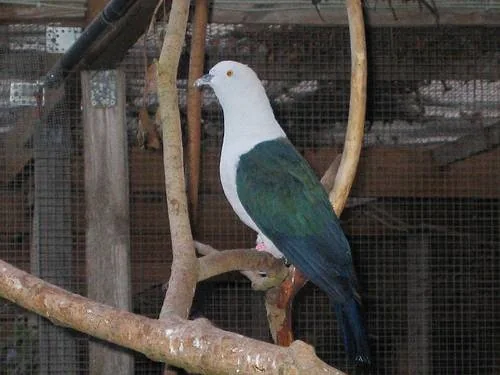
Image credits
- Blauschwanz-Fruchttauben (© Peter Tödter)
- Blauschwanz-Fruchttaube im Vogelpark Walsrode (© Johannes Pfleiderer)