Fruit dove profile
Pink-headed Fruit Dove (Ptilinopus porphyreus)
Species at a glance
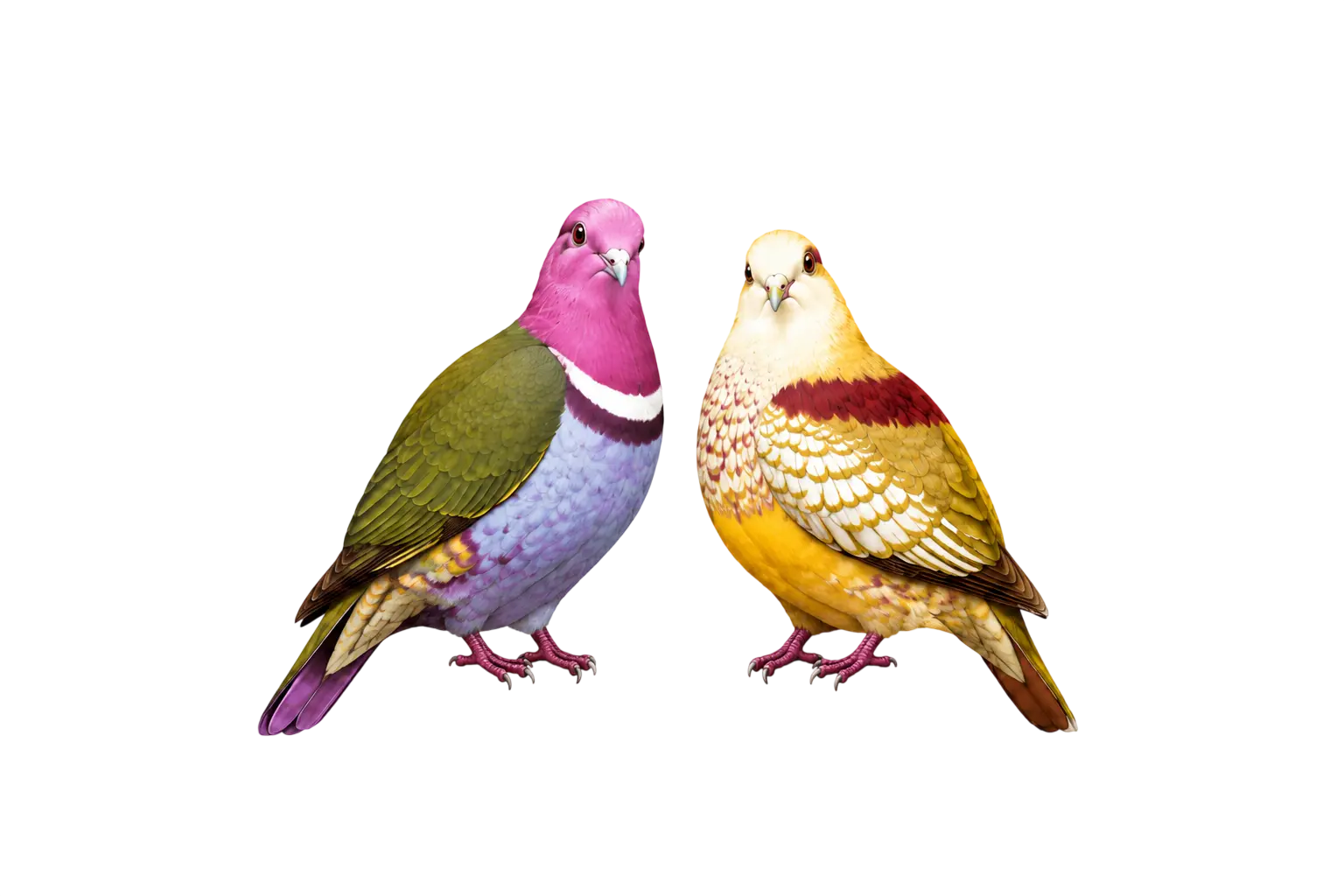
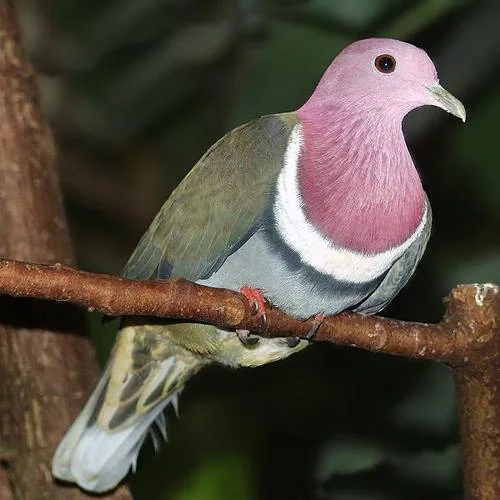
The Pink-headed Fruit Dove (Ptilinopus porphyreus) is a medium-sized montane forest pigeon of the Indonesian islands of Sumatra, Java and Bali. Its deep pink to purple head and neck contrast strongly with the green body plumage. The stock within the European Fruit Dove Project is secure and bred regularly.
- Distribution
- Mountain regions of southern Sumatra, Java and Bali.
- Size / characteristics
- about 27–29 cm | deep pink to purple head and neck, pale borders and predominantly green body plumage | sexes externally similar, female possibly slightly duller
- Status
- Project stock secure and bred regularly
Description
The Pink-headed Fruit Dove is restricted to montane forests of the Greater Sunda Islands. The head, nape and upper breast show rich pink to purple tones, sharply separated from the green body plumage by pale and dark borders. Males and females are externally similar, although females may appear slightly duller. The species is monotypic and mainly inhabits moist montane and cloud forest. The secure project stock enables systematic documentation of breeding lines and husbandry observations.
Profile & short facts for Pink-headed Fruit Dove
| English name | Pink-headed Fruit Dove |
|---|---|
| German name | Rosenhals-Fruchttaube |
| Scientific name | Ptilinopus porphyreus |
| Genus | Ptilinopus |
| Category | Ptilinopus - fruit doves |
| Distribution | Mountain regions of southern Sumatra, Java and Bali. |
| Subspecies | Monotypic; no subspecies are currently widely recognised. |
| Size / characteristics | about 27–29 cm | deep pink to purple head and neck, pale borders and predominantly green body plumage | sexes externally similar, female possibly slightly duller |
| Status | Project stock secure and bred regularly |
Habitat and natural range
Moist montane and cloud forest and mature secondary mountain forest, mainly at middle to higher elevations.
Feeding in the European Fruit Dove Project
The species feeds mainly on fruit and berries taken in the canopy. In human care, a varied selection of suitable fruits should be combined with a balanced complementary food for frugivorous pigeons. Body weight, condition and food intake should be documented regularly.
Husbandry in the European Fruit Dove Project
This robust and active montane species requires a spacious, densely structured and permanently frost-free aviary with open flight paths, stable elevated perches and protected retreat areas. Its montane origin must not be interpreted as general tolerance of cold housing.
Breeding and offspring
Well-protected elevated and load-bearing nest sites with suitable twig material should be offered. In the regularly bred stock, pair formation, pedigree, laying, hatching and juvenile development should continue to be documented consistently. Unverified general timing values are not used.
Subspecies and systematics
Monotypic; no subspecies are currently widely recognised.
Special notes on the species
The species is a monotypic montane endemic of Sumatra, Java and Bali. Its pink head and neck form one of the most striking patterns in the genus.
Conservation status
| IUCN | Least Concern |
|---|---|
| CITES | Not listed |
| EU species protection | Not listed |
| Ring size | 7,0 mm |
Further sources
Images of the Pink-headed Fruit Dove
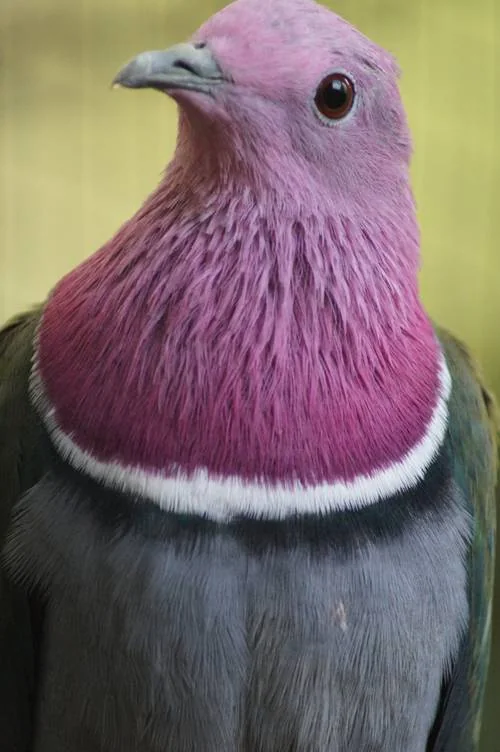
Image credits
- Rosenhals-Fruchttaube (© Thomas Breuer)
- Rosenhals-Fruchttaube (© Vogelpark Walsrode)