Fruit dove profile
Mariana Fruit Dove (Ptilinopus roseicapilla)
Species at a glance
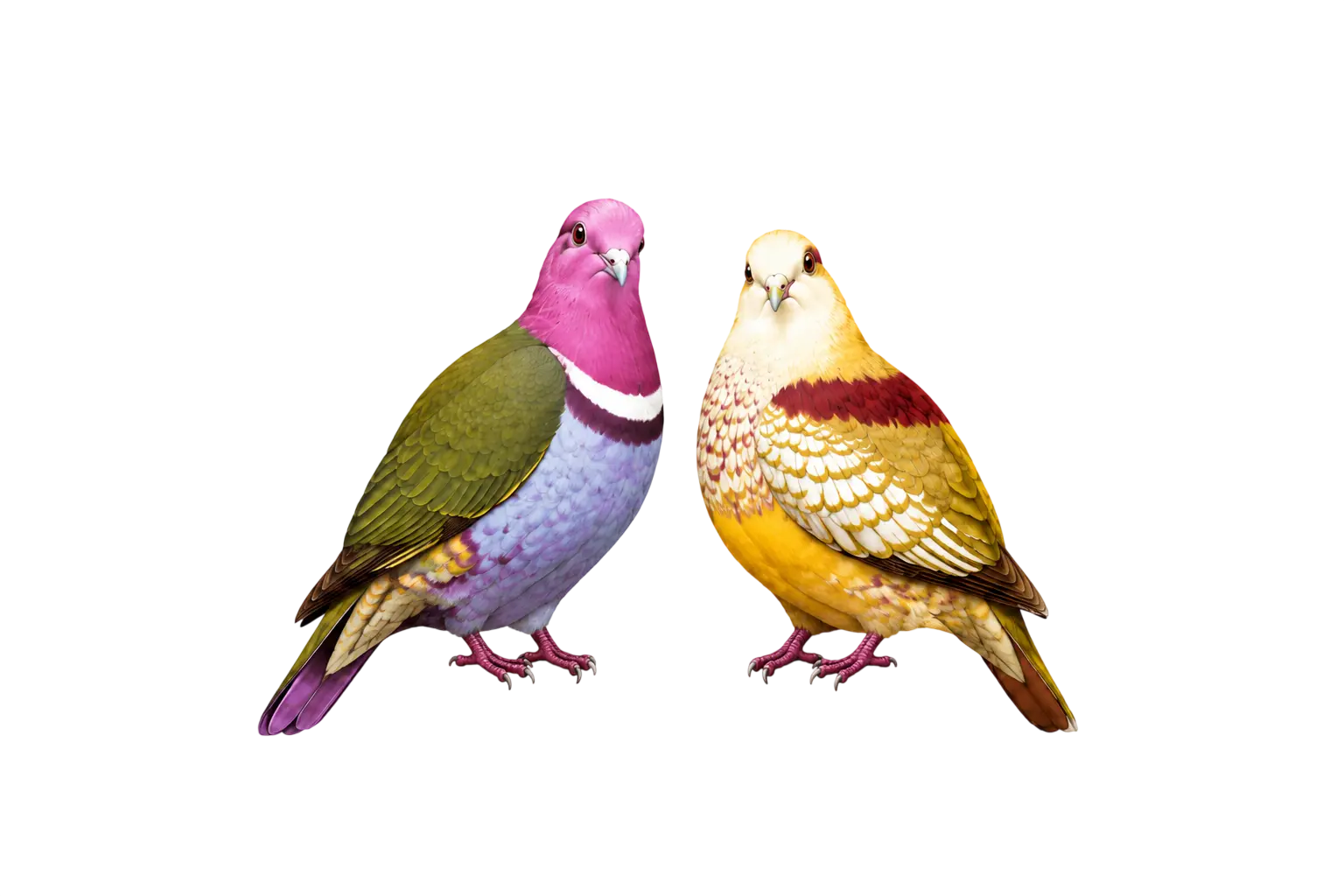
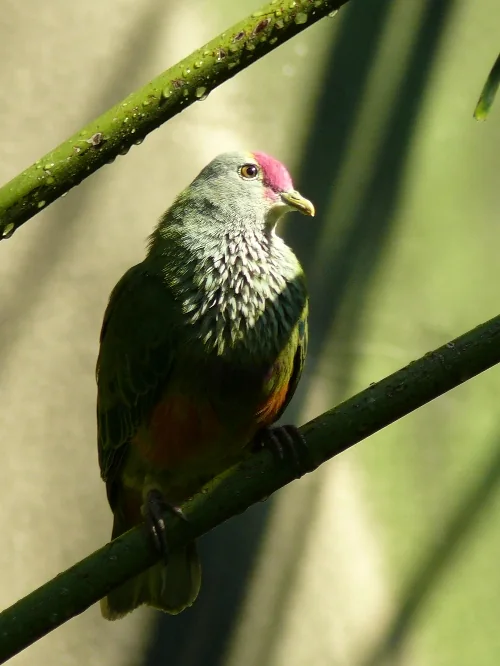
The Mariana Fruit Dove (Ptilinopus roseicapilla) is a small fruit dove endemic to the southern Mariana Islands, with a vivid pink crown. It now occurs mainly on Saipan, Tinian, Aguiguan and Rota; it was extirpated from Guam by introduced predators. The species is Near Threatened and is currently absent from the project stock.
- Distribution
- Southern Mariana Islands: now mainly Saipan, Tinian, Aguiguan and Rota; historically native to Guam but now extirpated there.
- Size / characteristics
- about 22–24 cm | predominantly green plumage, vivid pink crown and pale, yellowish and violet markings | sexes externally similar
- Status
- Currently not represented in the project stock
Description
The Mariana Fruit Dove is a characteristic fruit-eating bird of the southern Mariana Islands. Its mainly green plumage is complemented by a vivid pink crown and pale, yellowish and violet markings on the neck and underparts. Males and females are externally similar. The species is monotypic. It disappeared from Guam after the introduction of the brown treesnake; populations remain on several other islands but may be affected by habitat change, severe storms and invasive species.
Profile & short facts for Mariana Fruit Dove
| English name | Mariana Fruit Dove |
|---|---|
| German name | Marianenfruchttaube |
| Scientific name | Ptilinopus roseicapilla |
| Genus | Ptilinopus |
| Category | Ptilinopus - fruit doves |
| Distribution | Southern Mariana Islands: now mainly Saipan, Tinian, Aguiguan and Rota; historically native to Guam but now extirpated there. |
| Subspecies | Monotypic; no subspecies are currently widely recognised. |
| Size / characteristics | about 22–24 cm | predominantly green plumage, vivid pink crown and pale, yellowish and violet markings | sexes externally similar |
| Status | Currently not represented in the project stock |
Habitat and natural range
Native and secondary island forest, coastal woodland, forest edges, scrub and wooded cultivated landscapes.
Feeding in the European Fruit Dove Project
The species feeds mainly on small fruits, berries and figs and plays an important role in seed dispersal on the islands. In human care, a varied selection of suitably small fruits should be combined with a balanced complementary food for frugivorous pigeons.
Husbandry in the European Fruit Dove Project
This small and disturbance-sensitive island species requires a spacious, densely planted and permanently frost-free aviary with fine perches, short open flight paths and protected retreat areas. As there are currently no project birds, no recent project-specific husbandry data are available.
Breeding and offspring
Well-screened elevated nesting baskets or small platforms with fine twig material should be provided in any prospective holding. Unnecessary nest inspections should be avoided. Reliable current project data on pair formation and rearing are unavailable.
Subspecies and systematics
Monotypic; no subspecies are currently widely recognised.
Special notes on the species
The species is the official bird of the Northern Mariana Islands. Its disappearance from Guam is a striking example of the impact of introduced predators on island birds.
Conservation status
| IUCN | Near Threatened |
|---|---|
| CITES | Not listed |
| EU species protection | Not listed |
| Ring size | 5,5–6,0 mm |
Further sources
Images of the Mariana Fruit Dove
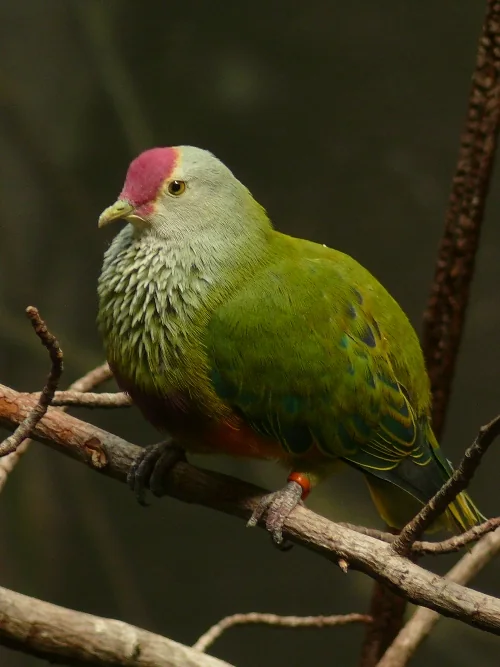
Image credits
Rosenkopf-Fruchttaube (© Johannes Pfleiderer)