Fruit dove profile
Superb Fruit Dove (Ptilinopus superbus)
Species at a glance
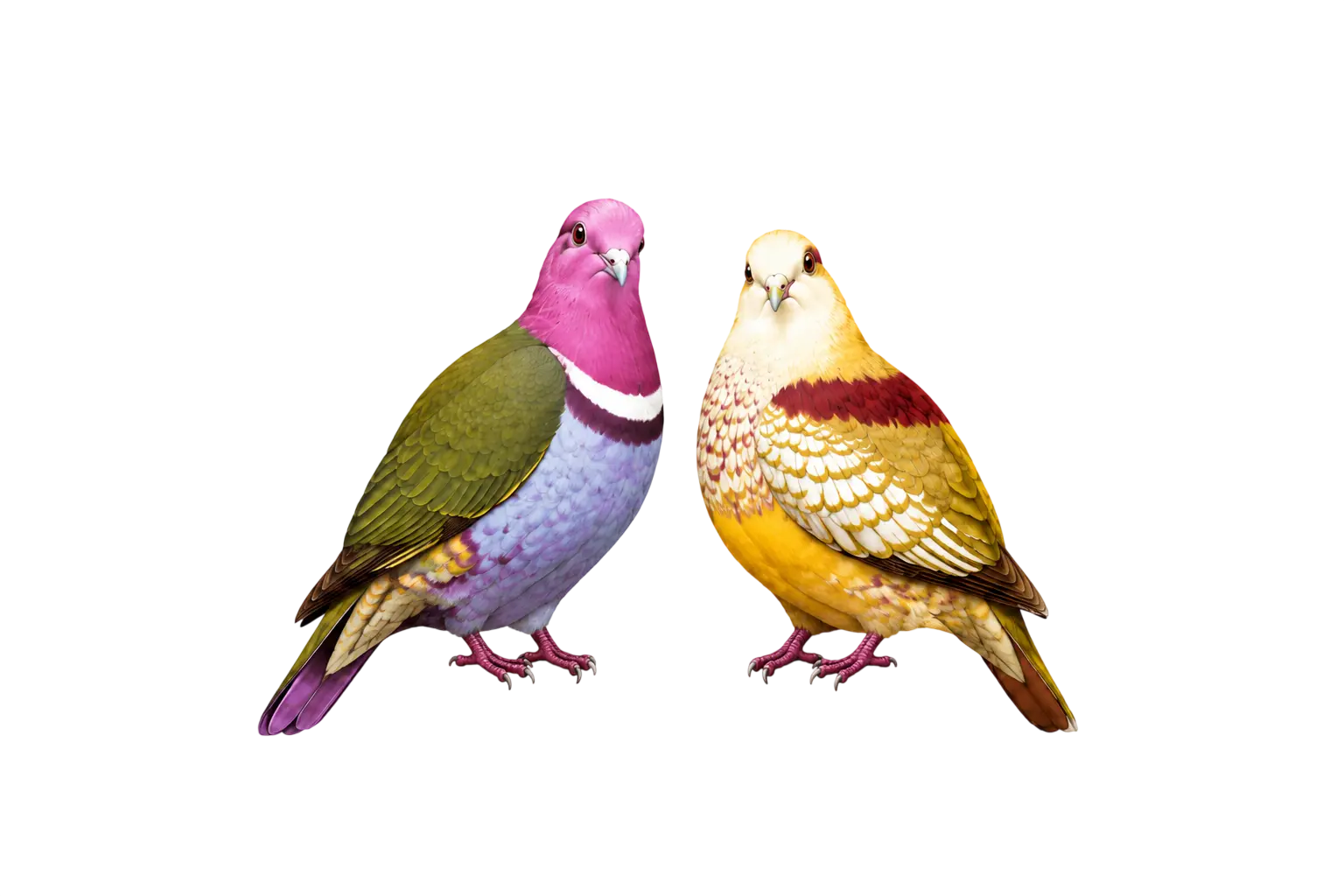
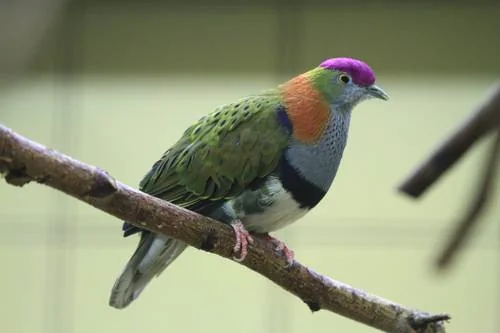
The Superb Fruit Dove (Ptilinopus superbus) is a small to medium-sized fruit dove with pronounced sexual dimorphism. The male has a violet crown and contrasting orange, green, white and dark plumage, while the female is predominantly green. The project stock is secure and bred regularly.
- Distribution
- Sulawesi and the Sula Islands, and from the Moluccas through New Guinea, the Bismarck Archipelago and Solomon Islands to northeastern and eastern Australia.
- Size / characteristics
- about 21–24 cm | male with violet crown and contrasting orange, green, white and dark plumage; female predominantly green | pronounced sexual dimorphism
- Status
- Project stock secure and bred regularly
Description
The Superb Fruit Dove has a broad range from Sulawesi and the Sula Islands through the Moluccas, New Guinea and the Bismarck Archipelago to the Solomon Islands and northeastern and eastern Australia. The sexes differ strongly: the male is richly multicoloured, whereas the predominantly green female is well camouflaged in foliage. AviList recognises two subspecies. BirdLife sometimes assesses the eastern and western groups separately, so the taxonomic concept used by each conservation source must be stated clearly.
Profile & short facts for Superb Fruit Dove
| English name | Superb Fruit Dove |
|---|---|
| German name | Prachtfruchttaube |
| Scientific name | Ptilinopus superbus |
| Genus | Ptilinopus |
| Category | Ptilinopus - fruit doves |
| Distribution | Sulawesi and the Sula Islands, and from the Moluccas through New Guinea, the Bismarck Archipelago and Solomon Islands to northeastern and eastern Australia. |
| Subspecies | Ptilinopus s. superbus – from the Moluccas through New Guinea, the Bismarck Archipelago and Solomon Islands to northeastern and eastern Australia | Ptilinopus s. temminckii – Sulawesi and the Sula Islands. |
| Size / characteristics | about 21–24 cm | male with violet crown and contrasting orange, green, white and dark plumage; female predominantly green | pronounced sexual dimorphism |
| Status | Project stock secure and bred regularly |
Habitat and natural range
Tropical and subtropical rainforest, gallery forest, monsoon forest, mature secondary woodland and regionally wooded coastal and cultivated landscapes.
Feeding in the European Fruit Dove Project
The species feeds mainly on small to medium-sized fruits, berries and figs. In human care, a varied fruit ration should be combined with a balanced complementary food for frugivorous pigeons. Multiple feeding sites support calm group management.
Husbandry in the European Fruit Dove Project
This active and social species requires a spacious, densely structured and permanently frost-free aviary with open flight paths, perches of different thicknesses and protected retreat areas. Group and pair behaviour and competition at feeding and nesting sites should be observed closely.
Breeding and offspring
Well-protected elevated nesting baskets or small platforms with suitable twig material should be offered. In the regularly bred stock, pair formation, pedigree, laying, hatching and juvenile development should continue to be documented consistently.
Subspecies and systematics
Ptilinopus s. superbus – from the Moluccas through New Guinea, the Bismarck Archipelago and Solomon Islands to northeastern and eastern Australia | Ptilinopus s. temminckii – Sulawesi and the Sula Islands.
Special notes on the species
The strong colour difference between the sexes is among the most striking in fruit doves. World lists differ in their treatment of the western temminckii form.
Conservation status
| IUCN | Least Concern |
|---|---|
| CITES | Not listed |
| EU species protection | Not listed |
| Ring size | 6,0 mm |
Further sources
Images of the Superb Fruit Dove
Image credits
Prachtfruchttaube (© Thomas Breuer)