Fruit dove profile
Green Imperial Pigeon – unresolved project stock (Ducula aenea ssp.)
Species at a glance
This profile does not represent a valid scientific taxon name but a project stock of Green Imperial Pigeons whose subspecies identity remains unresolved. The birds were historically listed under changing subspecies names or misleading trade names. The stock is secure within the project but must not be mixed with clearly identified lines until its identity has been clarified.
- Distribution
- The natural origin of this project stock is not reliably documented. The species Ducula aenea as a whole ranges across South and Southeast Asia to Indonesia and the Philippines.
- Size / characteristics
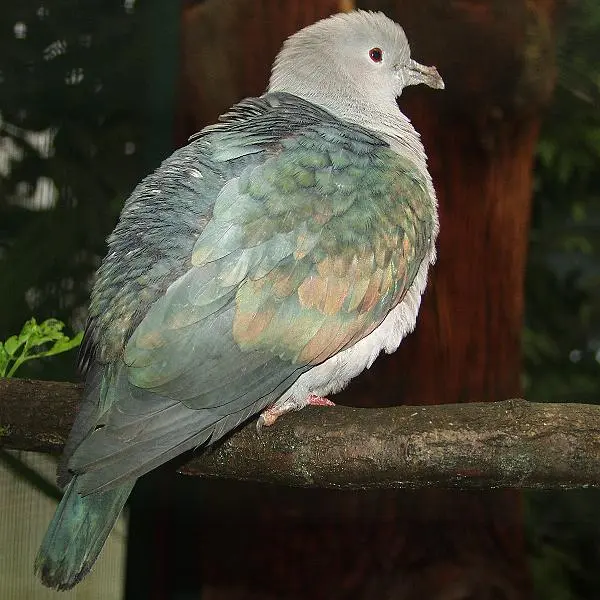
- large Green Imperial Pigeon with pale grey body areas and metallic green to bronze-glossed upperparts | currently available characters are insufficient for reliable subspecies identification
- Status
- Project stock secure; subspecies identity unresolved
Description
The designation Ducula aenea ssp. is a placeholder rather than a valid species or subspecies name. It identifies birds belonging to the Green Imperial Pigeon for which the available records do not permit a reliable assignment to geographic origin or subspecies. Historical trade and husbandry names are not suitable evidence for taxonomy and may cause confusion with other imperial pigeons. This record therefore primarily serves transparent population documentation. Until origin, morphology and, where appropriate, genetic information have been assessed sufficiently, the line must be managed separately from clearly identified subspecies.
Profile & short facts for Green Imperial Pigeon – unresolved project stock
| English name | Green Imperial Pigeon – unresolved project stock |
|---|---|
| German name | Bronzefruchttaube – ungeklärter Projektbestand |
| Scientific name | Ducula aenea ssp. |
| Genus | Ducula |
| Category | Ducula - imperial pigeons |
| Distribution | The natural origin of this project stock is not reliably documented. The species Ducula aenea as a whole ranges across South and Southeast Asia to Indonesia and the Philippines. |
| Subspecies | Subspecies identity unresolved. “Ducula aenea ssp.” is not a recognised taxon name. The species comprises eleven recognised subspecies, but this stock cannot currently be assigned reliably. |
| Size / characteristics | large Green Imperial Pigeon with pale grey body areas and metallic green to bronze-glossed upperparts | currently available characters are insufficient for reliable subspecies identification |
| Status | Project stock secure; subspecies identity unresolved |
| Note | D. sylvacia |
Habitat and natural range
No subspecies-specific natural habitat can be assigned to the unresolved stock. The species as a whole mainly occupies tropical and subtropical forest, mangroves, forest edges and mature secondary woodland.
Feeding in the European Fruit Dove Project
Like other Green Imperial Pigeons, the birds are mainly frugivorous. In human care, a varied fruit ration should be combined with a balanced complementary food for frugivorous pigeons. Feeding observations must be documented separately from taxonomic assumptions.
Husbandry in the European Fruit Dove Project
These large and active pigeons require a spacious, structured and permanently frost-free aviary with open flight paths, stable elevated perches and protected retreat areas. Until their taxonomic identity is clarified, they must be kept separate from clearly identified subspecies and individually marked.
Breeding and offspring
Breeding management should focus on stock preservation and documentation. Pairing with birds of confirmed subspecies identity should be avoided. Origin records, individual identification, pedigree, photographs, measurements and possible genetic findings should be recorded completely.
Subspecies and systematics
Subspecies identity unresolved. “Ducula aenea ssp.” is not a recognised taxon name. The species comprises eleven recognised subspecies, but this stock cannot currently be assigned reliably.
Special notes on the species
This record documents a project stock rather than a valid taxon. Historical trade names must not be used as evidence of origin or species identity.
Conservation status
| IUCN | Near Threatened |
|---|---|
| CITES | Not listed |
| EU species protection | Not listed |
| Ring size | 11,0 mm |
Further sources
Images of the Green Imperial Pigeon – unresolved project stock
Image credits
Bronzefruchttaube (© Seth Martens)