Fruit dove profile
White-bellied Imperial Pigeon (Ducula forsteni)
Species at a glance
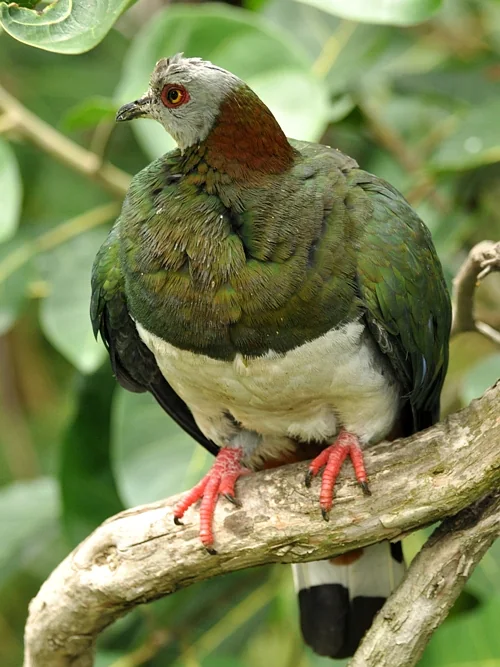
The White-bellied Imperial Pigeon (Ducula forsteni) is a large, strongly contrasting green-and-white imperial pigeon from Sulawesi and neighbouring islands. It inhabits lowland, hill and montane forests. The stock within the European Fruit Dove Project is currently extremely small.
- Distribution
- Sulawesi, including neighbouring island groups such as Sula, Togian and Peleng.
- Size / characteristics
- about 42.5–51.5 cm | around 510 g | white head and belly, dark green breast and green upperparts with a grey tail band | sexes externally very similar
- Status
- Extremely small project stock
Description
The White-bellied Imperial Pigeon is distinguished by its white head and belly, dark green breast and green upperparts. At about 42.5 to 51.5 cm in length, it is one of the larger species in the genus Ducula. The sexes are very similar, and differences in grey plumage areas are insufficient for reliable sexing. The species is restricted to Sulawesi and several neighbouring island groups. Because the project stock is extremely small, coordinated pair formation, reliable pedigree information and exchange between holders are especially important.
Profile & short facts for White-bellied Imperial Pigeon
| English name | White-bellied Imperial Pigeon |
|---|---|
| German name | Weißbauch-Fruchttaube |
| Scientific name | Ducula forsteni |
| Genus | Ducula |
| Category | Ducula - imperial pigeons |
| Distribution | Sulawesi, including neighbouring island groups such as Sula, Togian and Peleng. |
| Subspecies | Monotypic; no subspecies are currently widely recognised. |
| Size / characteristics | about 42.5–51.5 cm | around 510 g | white head and belly, dark green breast and green upperparts with a grey tail band | sexes externally very similar |
| Status | Extremely small project stock |
Habitat and natural range
Primary and secondary forest from the lowlands into hill and montane zones; regionally also forest remnants and wooded transition habitats.
Feeding in the European Fruit Dove Project
The species feeds mainly on fruit and therefore contributes to seed dispersal in forest habitats. In human care, the diet should combine a varied selection of suitable fruits with a balanced complementary food for frugivorous pigeons. In a very small conservation population, body condition and food intake should be documented regularly.
Husbandry in the European Fruit Dove Project
This large, powerful forest pigeon requires a spacious aviary with clear flight lines, stable elevated perches and densely planted or screened retreat areas. Its occurrence in montane forest must not be interpreted as tolerance of cold housing; accommodation should remain frost-free and climatically stable. Disturbance, competition at feeding sites and unsuitable mixed-species combinations should be avoided.
Breeding and offspring
Large imperial pigeons usually lay a single egg. Quiet, elevated and well-protected nesting platforms should be offered. Because the project stock is extremely small, pair selection, parentage, hatch dates and rearing outcomes require particularly careful coordination and documentation. Exact timing data should be included only when supported by verified project records.
Subspecies and systematics
Monotypic; no subspecies are currently widely recognised.
Special notes on the species
The strong contrast between the white belly and dark green breast makes the species unmistakable. Its restricted distribution in the Sulawesi region highlights the value of coordinated population management in human care.
Conservation status
| IUCN | Least Concern |
|---|---|
| CITES | Not listed |
| EU species protection | Not listed |
| Ring size | 10,0 mm |
Further sources
Images of the White-bellied Imperial Pigeon
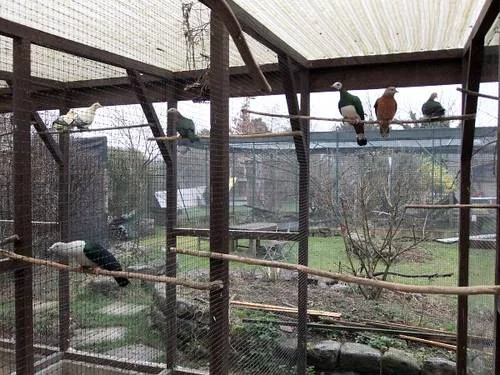
Image credits
- Weißbauch-Fruchttaube (© Seth Martens)
- Weißbauch-Fruchttaube im San Diego Zoo (© Johannes Pfleiderer)