Fruit dove profile
Silver-tipped Imperial Pigeon (Ducula luctuosa)
Species at a glance
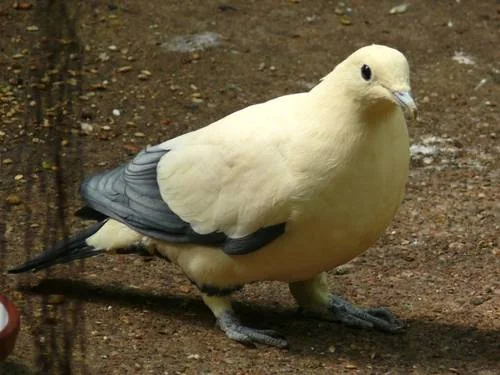
The Silver-tipped Imperial Pigeon (Ducula luctuosa) is a large, predominantly white imperial pigeon with silvery-grey flight feathers edged in dark markings. It occurs on Sulawesi and neighbouring islands and uses lowland forest, mangroves and modified woodland. Its stock within the European Fruit Dove Project is currently regarded as secure.
- Distribution
- Sulawesi and neighbouring islands, including the Sula Islands.
- Size / characteristics
- about 37–48 cm | around 410 g | predominantly white plumage, silvery-grey flight feathers with dark edges, and dark markings on belly and undertail | sexes externally similar
- Status
- Project stock secure
Description
The Silver-tipped Imperial Pigeon can be distinguished from the Pied Imperial Pigeon by its pale silvery-grey, dark-edged flight feathers. Dark markings on the belly, thighs and undertail may give the plumage a lightly mottled appearance. Males and females are externally similar. The species is restricted to Sulawesi and neighbouring islands but appears comparatively adaptable in its choice of habitat. The secure project stock provides a good basis for long-term documentation of pedigree, breeding results and husbandry observations.
Profile & short facts for Silver-tipped Imperial Pigeon
| English name | Silver-tipped Imperial Pigeon |
|---|---|
| German name | Elsterfruchttaube |
| Scientific name | Ducula luctuosa |
| Genus | Ducula |
| Category | Ducula - imperial pigeons |
| Distribution | Sulawesi and neighbouring islands, including the Sula Islands. |
| Subspecies | Monotypic; no subspecies are currently widely recognised. |
| Size / characteristics | about 37–48 cm | around 410 g | predominantly white plumage, silvery-grey flight feathers with dark edges, and dark markings on belly and undertail | sexes externally similar |
| Status | Project stock secure |
Habitat and natural range
Tropical lowland forest, open and secondary woodland, mangroves, and more heavily modified forest and cultivated landscapes.
Feeding in the European Fruit Dove Project
The species feeds mainly on fruit and berries, foraging primarily in trees and larger shrubs. In human care, a varied fruit ration should be combined with a suitable complementary diet for frugivorous pigeons. Food intake, body weight and tolerance of individual dietary components should be documented consistently within the project.
Husbandry in the European Fruit Dove Project
The species requires a spacious aviary with open flight space, elevated perches and sheltered areas. Because it also uses forest edges and more open habitats, the enclosure should combine clear flight lines with structured retreat zones. Year-round frost-free housing and careful observation in mixed-species settings remain essential.
Breeding and offspring
The clutch normally consists of a single egg. Quiet, elevated and stable nest sites with suitable twig material support undisturbed breeding behaviour. As the project stock is regarded as secure, pair formation, incubation, hatching and juvenile development should be recorded consistently so that species-specific experience remains reliable.
Subspecies and systematics
Monotypic; no subspecies are currently widely recognised.
Special notes on the species
The silvery-grey rather than black flight feathers are an important feature separating this species from the similarly coloured Pied Imperial Pigeon. It is treated as a distinct monotypic island species.
Conservation status
| IUCN | Least Concern |
|---|---|
| CITES | Not listed |
| EU species protection | Not listed |
| Ring size | 11,0 mm |
Further sources
Images of the Silver-tipped Imperial Pigeon
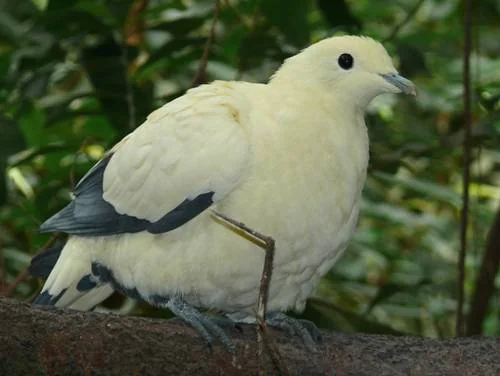
Image credits
- Elsterfruchttaube im Zoo Berlin (© Johannes Pfleiderer)
- Charakteristische Färbung der Schwungfedern der Elsterfruchttaube - hellgrau mit dunkler Umrandung (© Johannes Pfleiderer)
- Elsterfruchttaube Kopfansicht (© Johannes Pfleiderer)
- Elsterfruchttaube (© Johannes Pfleiderer)
- Unterschwanzdecken der Elsterfruchttaube (© Johannes Pfleiderer)
- Vergleich Elster- (hinten) und Kaiserfruchttaube (vorne) (© Johannes Pfleiderer)
- Vergleich Elster- (links) und Kaiserfruchttaube (rechts) (© Johannes Pfleiderer)
- Vergleich der Unterschwanzdecken von Elster- (links) und Kaiserfruchttaube (rechts) (© Johannes Pfleiderer)